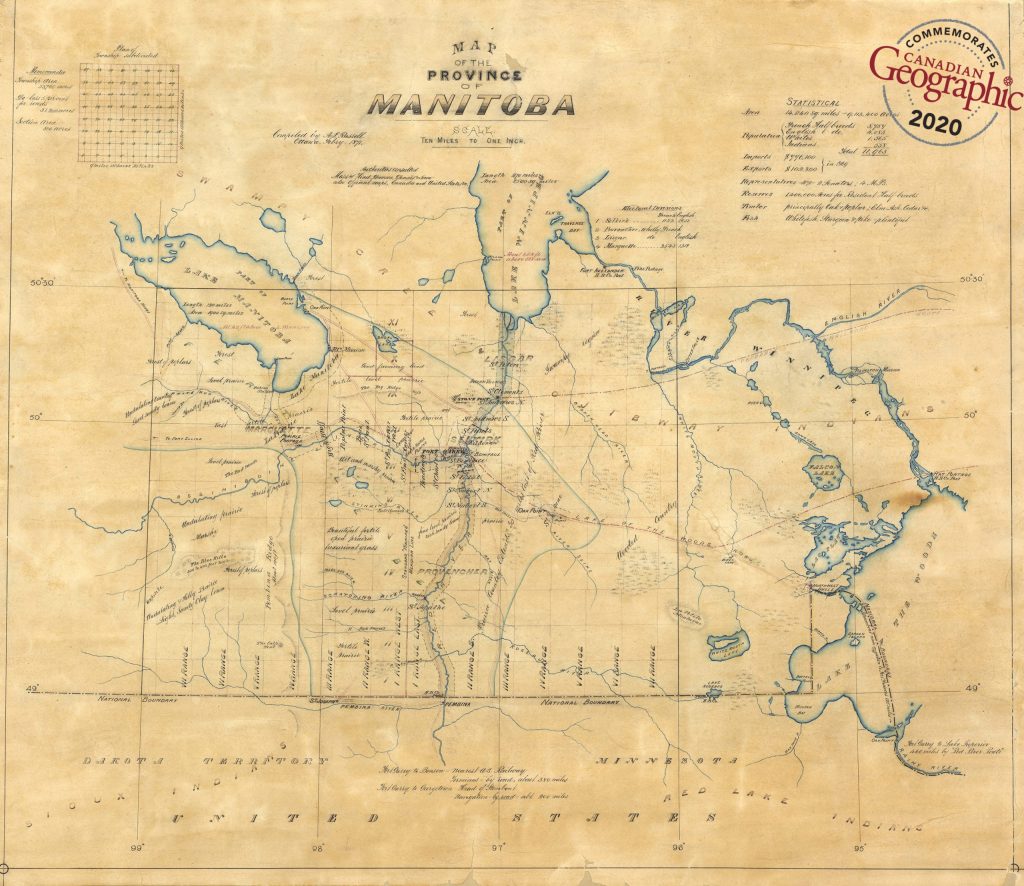
Introduction:
The creation of Manitoba in 1870 stands as a major moment in Canadian history, and at the heart of this pivotal event were the Métis people. Métis involvement in the negotiations and shaping of Manitoba’s destiny played a crucial role in defining the character and trajectory of the province. This article will discuss the creation of Manitoba that arose from the Métis response to the Canadians encroaching on the Red River settlement and the surveying of Métis land.
The Métis and the Red River Resistance:
The story of Manitoba begins with the Red River Resistance, a series of events that unfolded in the Red River Settlement (present-day Manitoba) during the 1860s between the Métis and the Canadian survey party. The Métis, led by Louis Riel, emerged as central figures in resisting the Canadian government’s attempts to assert control over the region without considering the rights and aspirations of the Métis people.
The Manitoba Act of 1870: Recognition of Métis Rights:
The Métis problem at Red River and our resistance to encroachment led to negotiations between the Métis and the Canadian government. The outcome was the Manitoba Act of 1870, a foundational document that established the province of Manitoba. Importantly, this act recognized the unique rights and culture of the Métis. Section 31 of the Manitoba Act specifically acknowledged the land rights of the Métis, granting them a guarantee of 1.4 million acres of land.
Land Provisions and Scrip: The Attempt to Address Métis Concerns:
The Manitoba Act not only recognized Métis land rights but also addressed the concerns of the Métis population regarding land ownership. To implement this, the government introduced the scrip system, which ultimately failed badly. Métis Scrip was a form of land grant that allowed Métis individuals to exchange our traditional land rights for scrip, which could be used to obtain land elsewhere. This was an attempt to reconcile Métis interests with the influx of settlers into Manitoba. Unfortunately, this scrip system was misused, and abused leaving many Métis swindled out of their scrip.
Louis Riel: A Key Negotiator for the Métis:
At the forefront of these negotiations was Louis Riel, a Métis leader and visionary who played a pivotal role in articulating Métis grievances and aspirations. Riel’s leadership and diplomatic skills were instrumental in ensuring that the Manitoba Act reflected the rights and interests of the Métis people. His efforts helped shape the future of the Métis within the context of the Canadian Confederation.
The Legacy of Métis Involvement:
The involvement of the Métis in the creation of Manitoba left a lasting legacy. Our struggles for recognition and land rights set a precedent for the inclusion of Indigenous perspectives in the formation of Canadian provinces. The recognition of Métis rights in the Manitoba Act was a critical step in acknowledging the diversity and complexity of the Canadian nation.
Conclusion:
In conclusion, the Métis played a pivotal role in the creation of Manitoba, shaping the province’s foundations through our resistance, negotiations, and the recognition of our unique rights. The Manitoba Act of 1870 and subsequent land provisions were a testament to the efforts of the Métis in asserting our identity and securing a place within the evolving landscape of Canada. The Métis involvement in the creation of Manitoba remains a crucial chapter in the ongoing story of Indigenous rights and the development of the Canadian nation.
 tilixam
Leave a comment