Meet my family
The people that made Western Canada before it was..
“Here are some of my family members, though this isn’t an exhaustive list. They played pivotal roles in shaping Western Canada during the time when it was known as Rupertsland. Some were instrumental in establishing Edmonton. Two individuals witnessed the Selkirk Treaty, and one of their sons served as the interpreter. Many in this list were multilingual and worked as interpreters, contributing to significant events such as Alberta’s Treaty 7 negotiations. They also played roles as interpreters in major treaties beyond Canada, including the 1855 Blackfoot treaty in Montana and the 1855 Willamette Valley Treaty in Oregon. This is just a glimpse of the extensive contributions made by these individuals.”
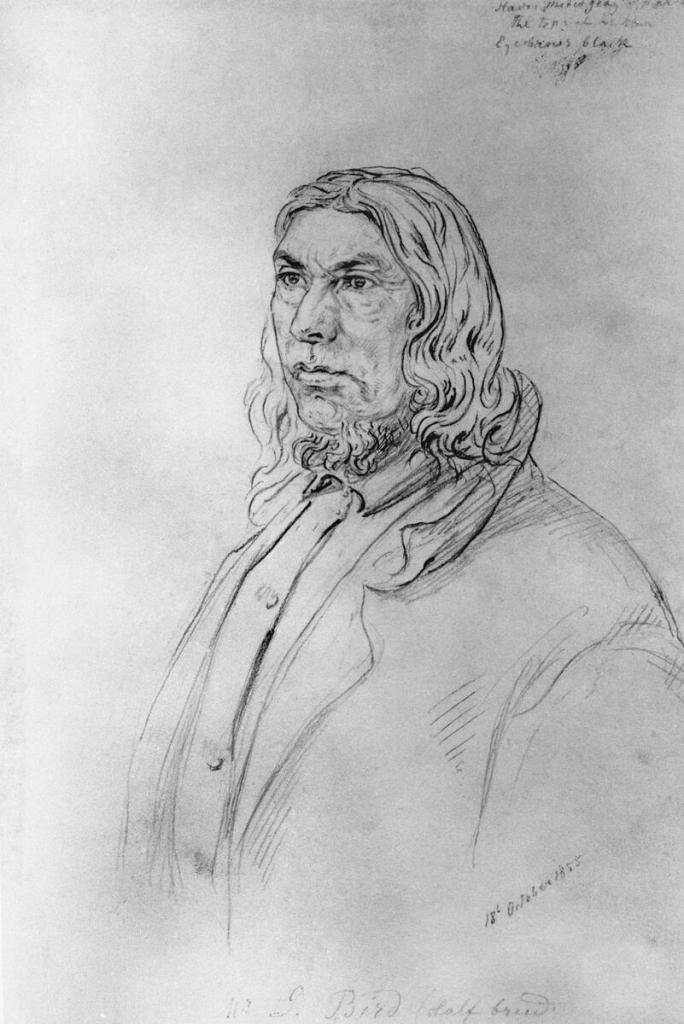
“James ‘Jimmy Jock’ Bird, Blackfoot interpreter.”, 1855-10-18, (CU198596) by Sohon, Gustavus. Courtesy of Glenbow Library and Archives Collection, Libraries and Cultural Resources Digital Collections, University of Calgary.
Isaac Batt
7th Great Grandfather
(c. 1730 – 1791) was a Canadian fur trader. He was born to parents Dantzick Batt and Sarah Lindsel. He had a younger brother, Dantzick, baptized January 23, 1729. Isaac was baptized January 7, 1731 in Widford, Hertfordshire, England. He was a fur trader mostly with the Hudson’s Bay Company and the first record of him dates to 1754. At that time he had a contract to serve as a labourer at York Factory (Man.).
Batt quickly proved to be useful in the “Inland trade”‘ aspect of the company business and was influential amongst the Indians near present day The Pas, Manitoba. Batt married a Cree chief’s daughter in 1756 and had one daughter Margaret Nistichio Batt.
In 1791 he left Manchester House to go hunting with some Indians he did not know. They robbed and murdered him. He was one of the few HBC men killed by Indians.
Matthew Cocking
6th Great Grandfather
Born in York, England, Cocking first came to York Fort in 1765 as a writer. In 1772 he went inland as a volunteer, travelling with the Natives for nearly a year. Upon his return, he provided detailed descriptions of life on the western prairie. He undertook several subsequent inland journeys before settling at Fort Severn in 1777 and then at York Fort in 1781. He retired to England in 1782, his service in providing information on the inland territory well appreciated by the Hudson’s Bay Company. (Excerpt above from.. )
William Hemmings Cook
5th Great Grandfather
Born in the parish of St. Andrew’s, Holborn, London about 1766, he entered the service of the Hudson’s Bay Company as a writer in 1786 and was employed at York Factory until 1791, when he established Chatham House. He remained in charge of the post until he went back to England in 1794. He returned to York Factory in 1795.
In September 1797, Cook settled at Split Lake and was placed in charge of the posts on the Nelson River. He remained there until 1809 when he took over the management of York Factory, a position he held until 1815. He spent the winter of 1815-1816 in the neighbourhood of Oxford House, in retirement, but rejoined the Company and was posted at Split Lake from 1816 to 1818. During 1818-1819 he had charge of the posts in the Swan River area but resigned again in the summer of 1819 to become a settler.
He had three wives, the first two “in the custom of the country,” the third being Mary, a daughter of Matthew Cocking, whom he married on 8 March 1838. He had four sons and seven daughters. He took his family to the Red River Settlement, and on 29 May 1822 was appointed a Councillor of the Governor of Assiniboia. He was appointed Councillor of the District of Assiniboia on 27 February 1839.
He died at Red River Settlement on 23 February 1846.
James Spence
5th Great Grandfather
James Spence (1778-1857) of Orkney, Scotland, joined the Hudson’s Bay Company (HBC) in 1797 as a tailor, sailing to York Factory. His 5’5 ½” stature, crucial during seamen shortages, drew attention. Around 1808, he married Mary, a Stone Indian, and worked as a tailor in the Saskatchewan District until 1818. Moving to the Red River Settlement in 1818, he witnessed the 1821 HBC-NWC union under Governor George Simpson. Mary passed away in 1821, and in 1822, James remarried Jane Morwick Norquay, a widow with five children. James, the HBC Tailor for Red River, supported Reverend John West’s St. John’s Boy’s School. His legacy extended through his children, including John Norquay, who became the Premier of Manitoba. James Spence, a pivotal figure in the burgeoning St. James Parish, passed away on November 30, 1857. His wife, Jane, lived on until March 23, 1875.
John Park
4th Great Grandfather
John Park, born around 1770 in the Orkneys of Scotland, had a distinguished career with the Hudson’s Bay Company (HBC). In 1792, he joined as a Voyageur in the York Factory District and served under Joseph Howse during the historic Howse Expedition across the Rocky Mountains in 1809-1811.
In 1815, John became the Assistant Trader at Edmonton and formed a relationship with Métis woman Margaret. After retiring due to the HBC-NWC union in 1821, he settled in St Andrews on the Red River. The 1827 Red River Census recorded his household with two sons and three daughters.
John Park passed away on August 8, 1847. The legacy of his family continued in the area, marked by marriages and connections to the community. The region became known as St. Andrews, with a stone church consecrated in 1849. John’s wife Margaret passed away around 1853, buried in the old St Andrews Church Cemetery.
James Sutherland
4th Great Grandfather
James Sutherland (1777-1844) was a key figure in the early history of the Hudson’s Bay Company (HBC), playing a pivotal role in the fur trade and the development of the Red River Settlement. Born around 1777 in Ronaldshay, Orkneys, Scotland, he joined HBC in 1797 as a Writer at York Factory, rising through the ranks to become a Master and Trader.
In 1800, he “country wed” Sarah, a Cree Indian, with whom he had several children. After Sarah’s death, he married Jane Flett in 1814-15. James was deeply involved in the tumultuous times of the early 19th century, witnessing the arrival of Selkirk Settlers and being embroiled in the Metis Rebellion of 1816.
He served in various capacities across HBC districts, including Cumberland House, Winnipeg, and Swan River. Following the union of the North West Company and HBC in 1821, he became Chief Factor of the Saskatchewan District and later the Fort Severn District.
Retiring in 1827, he settled in Red River, marrying Jane Flett in 1828. James passed away in Red River on September 30, 1844, leaving a legacy as a significant figure in the fur trade history of Western Canada.
John Hourie
4th Great Grandfather
John HOURIE was born in 1779 in the Orkneys of Scotland (South Ronaldshay). He joined the Hudson’s Bay Company (HBC) for service in the fur trade, but there is no record of this in the online HBC Archives.
Around 1809, John HOURIE married Margaret BIRD, a Shoshoni (Snake) Indian adopted by James Curtis BIRD at Rocky Mountain House. At that time, JC BIRD was an HBC trader at Edmonton House. Their first child, John Jr, was born around 1810 on Hudson’s Bay, and their second child, Robert, was born in 1815 in the Red River Settlement.
The union of the North West Company (NWC) and the Hudson’s Bay Company occurred in 1821. After the merger, John HOURIE was listed in the Red River Census of 1827 with a family that included four young sons.
Jeremiah “Jerry” Cook
4th Great Grandfather
Jeremiah “Jerry” Cook, born around 1804 in Split Lake, was the son of William Hemmings Cook, an influential Hudson’s Bay Company fur trader, and Ke-che-cow-e-com-e-coot. At the age of 15 in 1819, Jerry’s father resigned from HBC, and the family settled in Red River. In 1821, Jerry witnessed the union of the North West Company and the Hudson’s Bay Company. He married Eleanor “Ellen” Spence in 1823, and they had several children. Jerry’s life spanned significant historical events, including the Red River Rebellion in 1869. After his death in January 1872, his widow Ellen continued to navigate challenges, eventually passing away in 1882. Jerry’s legacy includes descendants involved in various unions and marriages, shaping a family history intertwined with the development of Manitoba and Canada.
Charles Richard McKay
3rd Great Uncle
Charles Richard McKay (1808-1873), born in Manitoba, was a Red River Metis leader who joined the Sinclair expedition to settle in the Oregon Territory in 1841. Charles was the son of John McKay and Mary Favel a Métisse. His notorious uncle, “Mad Donald,” had founded Brandon House. McKay’s father John spent most of his career there. Elected captain of militia at Champoeg, McKay actively participated in the Yakima Indian War in 1855. An entrepreneur, he engaged in gold mining, cattle ranching, and real estate. McKay prospered in the cattle business, later establishing the community of Glencoe in Oregon. Despite financial challenges, he defied stereotypes about the Metis, becoming an American citizen in 1851. In 1849, he ventured to California’s gold mines but found greater success supplying miners. McKay’s resilience and leadership contributed to the development of the Pacific Northwest. He passed away in May 1873 in Glencoe, Washington County, leaving a legacy as a pioneering Metis figure and key contributor to the region’s growth.
James Curtis Bird
4th Great Grandfather
Born at Acton, Middlesex, England about 1773, he entered the service of the Hudson’s Bay Company at about age 15, in 1788. First employed as a writer at York Factory, he went inland in 1792. He was later put in charge of South Branch House (1793-1794), Nippoway (1794-1795), and Carlton House (1795-1799). After working as a master and trader near Edmonton (1799-1804), he became Chief Factor at Edmonton House (1804-1816). He was later in charge at Carlton House (1816-1817) and Cumberland House (1818-1819). (Excerpt above from.. )
Succeed Robert Semple in 1817 as temporary governor-in-chief of Red River until George Simpson arrived in Rupertsland. Witness signatory on the Selkirk Treaty.
Thomas Thomas
4th Great Grandfather
Born in Wales around 1766, he joined the Hudson’s Bay Company as a surgeon in 1789 and became master of Severn House from 1796 until 1810, when he became superintendent of the Southern Department. In 1814 he became governor of the Northern Department and in 1815 a councillor of Assiniboia. He refused to succeed Robert Semple in 1817 as temporary governor-in-chief of Red River. He retired to Red River in 1819 and was again appointed to the Council of Assiniboia in 1822. Both Colin Robertson and George Simpson regarded him as timid and weak. He died at the Red River Settlement in 1828. (Excerpt above from.. )
Witness signatory on the Selkirk Treaty.
George Bird
3rd Great Grandfather
Born in Rupert’s Land in 1795 , the son of James Bird Senior, Chief Factor in the Saskatchewan district, and of Oomenahowish, a native woman. On 23 August 1825, he married Anne Thomas, daughter of Thomas Thomas, a principal settler of Red River, and his native wife, Sarah. The baptisms of nine children were recorded in the registers of St. John’s Parish between 1824 and 1826. He was apprenticed in 1805 to the Hudson’s Bay Company in the York Factory district, and was made an Assistant Trader in 1812 in the Saskatchewan district. After a year in England he was assigned as Company clerk at Carlton House (1815-1818) and at Edmonton House (1818-1821). Following the coalition of the Hudson’s Bay Company and the North West Company in 1821 he served as interpreter. Bird retired to the Red River Settlement in June 1825, where he died 18 October 1856. (Excerpt above from.. )
James Bird Jr.(Jemmy)
3rd Great Uncle
James Bird Jr. (1798-1892), also known as “Jemmy Jock Bird,” “Jimmy Joke Bird”, “Jamey Jock Bird,” and many variations in between, was a man of many languages. Bird spoke at least seven: Cree, Stoney, Sarcee, Blackfoot, French, as well as the English he had learned from his father. Even at his death at an advanced age, Bird’s English still had a “lingering echo” of an English Middlesex accent. During his long life, he interpreted for the Hudson’s Bay Company, the American Fur Company, Christian missionaries, and even at treaty negotiations both north and south of the 49th parallel. Bird made his living mediating between not just language groups but between cultures: an essential role in the pluralistic society of nineteenth-century Fort Edmonton. (Excerpt above from.. )
James Sinclair
3rd Great Uncle
Born in Rupert’s Land in 1811, the son of an Orcadian Hudson’s Bay Company officer and an Indian or mixed-blood wife, he was educated in Scotland. Returning to Rupert’s Land in 1826, he worked briefly for the HBC before entering into private trade, eventually in partnership with Andrew McDermot. In 1841 he led a party of 23 Red River families to the Columbia River. He later fought with the HBC over trading rights and went to London to submit a petition to the British government. He was briefly in California in 1848 and then acted as counsel for Pierre-Guillaume Sayer in 1849. He then decided to migrate to the Oregon Territory and proposed leading another party of emigrants there. He spent some time in Oregon and California before joining the HBC as head of Fort Walla Walla. He was killed in an Indian attack at Walla Walla on 26 March 1856. (Excerpt above from.. )
John Flett
3rd Great Uncle
Born in 1815 in Rupert’s Land, John Flett, an early Red River Colony settler, later farmed in Oregon. His father was in charge of the Hudson’s Bay Company’s store for the Cumberland district. He served as a vital Indian interpreter under General Joel Palmer, aiding successful treaty negotiations. Settling in Pierce County in 1859, Flett, a skilled linguist, contributed to the Puyallup Indian Reservation. A devoted family man, he married Charlotte Bird in 1821. Flett, recognized for courage and discretion in his work, enjoyed a long, fulfilling life, rounding off his years near Tacoma. (Summaries above from.. )
John William Cromartie(y)
3rd Great Grandfather
John William Cromarty came from Scotland to work for the Hudson’s Bay Company.John W. and his wife Elizabeth became parents to John Cromarty (1772-1847) who married Catherine Park (1821) of York Factory. Their children were William, George, Magnus and Samuel and likely all born at St. Andrews Parish (Winnipeg).(Excerpt above from.. )
????
2nd Great Grandfather
In progress
???
Great Grandfather
In progress
William Edward Cromartie(y)
2nd Great Grandfather
(son of John Cromartie and Catherine Park) was born 14 Mar 1841 in Fort Severn, Manitoba,3, and died 06 May 19263.He married Mary Ann Hourie on 11 Dec 1862 in St. Andrew’s Parish, Winnipeg, Manitoba, daughter of George Hourie and Ellen Cook.
On December 11, 1862 William E. married Mary Ann Hourie (September 15, 1846).She was the daughter of George and Ellen(Cook) Hourie of York Factory.The Cromartys, Houries and Cooks were all Hudson Bay servants.
William Bird Sr.
2nd Great Grandfather
In Progress
William Bird Jr
Great Grandfather
In progress
 tilixam